
HP certification practice
HPE6-A84 Practice Questions
Try 10 free HPE6-A84 exam-style questions for Aruba Certified Network Security Expert Written. Check each answer and review the explanation and source references.
- Exam code
- HPE6-A84
- Provider
- HP
- Free questions
- 10
- Full set
- 59 questions
- Last update check
HPE6-A84 candidates can use this Cert Mage practice test to measure their readiness for the Aruba Certified Network Security Expert Written Exam. Work through realistic practice questions, compare your responses with the provided answers, and study the explanations behind each correct choice. This approach helps reveal knowledge gaps and makes your remaining exam preparation more focused.
A customer needs you to configure Aruba ClearPass Policy Manager (CPPM) to authenticate domain users on domain computers. Domain users, domain computers, and domain controllers receive certificates from a Windows CA. CPPM should validate these certificates and verify that the users and computers have accounts in Windows AD. The customer requires encryption for all communications between CPPM and the domain controllers. You have imported the root certificate for the Windows CA to the ClearPass CA Trust list.
Which usages should you add to it based on these requirements?
Refer to the scenario. # Introduction to the customer You are helping a company add Aruba ClearPass to their network, which uses Aruba network infrastructure devices. The company currently has a Windows domain and Windows C A. The Window CA issues certificates to domain computers, domain users, and servers such as domain controllers. An example of a certificate issued by the Windows CA is shown here. 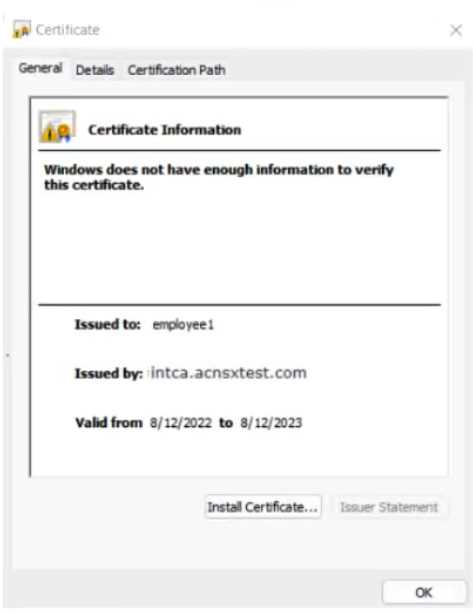 ?
? 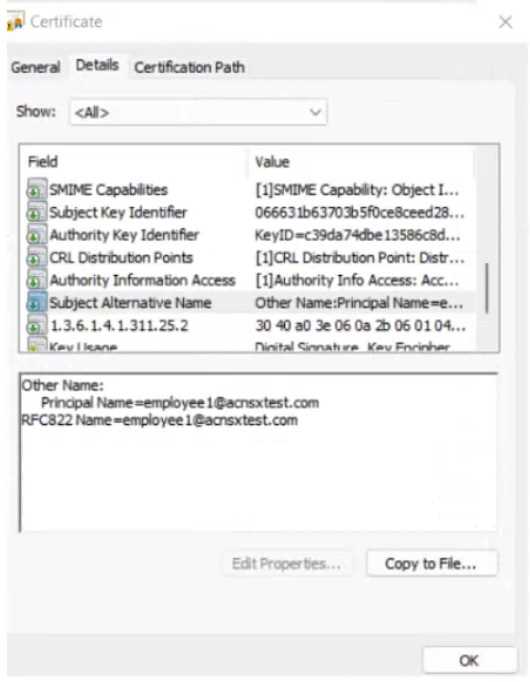 ? The company is in the process of adding Microsoft Endpoint Manager (Intune) to manage its mobile clients. The customer is maintaining the on-prem AD for now and uses Azure AD Connect to sync with Azure AD. # Requirements for issuing certificates to mobile clients The company wants to use ClearPass Onboard to deploy certificates automatically to mobile clients enrolled in Intune. During this process, Onboard should communicate with Azure AD to validate the clients. High availability should also be provided for this scenario; in other words, clients should be able to get certificates from Subscriber 2 if Subscriber 1 is down. The Intune admins intend to create certificate profiles that include a UPN SAN with the UPN of the user who enrolled the device. # Requirements for authenticating clients The customer requires all types of clients to connect and authenticate on the same corporate SSID. The company wants CPPM to use these authentication methods:
EAP-TLS to authenticate users on mobile clients registered in Intune
TEAR, with EAP-TLS as the inner method to authenticate Windows domain computers and the users
on them
To succeed, EAP-TLS (standalone or as a TEAP method) clients must meet these requirements:
Their certificate is valid and is not revoked, as validated by OCSP
The client’s username matches an account in AD
# Requirements for assigning clients to roles
After authentication, the customer wants the CPPM to assign clients to ClearPass roles based on the
following rules:
Clients with certificates issued by Onboard are assigned the “mobile-onboarded” role
Clients that have passed TEAP Method 1 are assigned the “domain-computer” role
Clients in the AD group “Medical” are assigned the “medical-staff” role
Clients in the AD group “Reception” are assigned to the “reception-staff” role
The customer requires CPPM to assign authenticated clients to AOS firewall roles as follows:
Assign medical staff on mobile-onboarded clients to the “medical-mobile” firewall role
Assign other mobile-onboarded clients to the “mobile-other” firewall role
Assign medical staff on domain computers to the “medical-domain” firewall role
All reception staff on domain computers to the “reception-domain” firewall role
All domain computers with no valid user logged in to the “computer-only” firewall role
Deny other clients access # Other requirements Communications between ClearPass servers and on-prem AD domain controllers must be encrypted. # Network topology For the network infrastructure, this customer has Aruba APs and Aruba gateways, which are managed by Central. APs use tunneled WLANs, which tunnel traffic to the gateway cluster. The customer also has AOS-CX switches that are not managed by Central at this point. 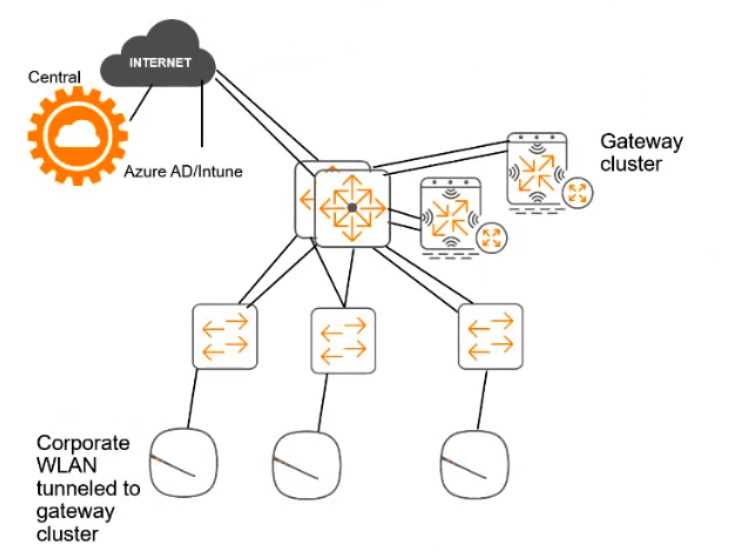 ? # ClearPass cluster IP addressing and hostnames A customer’s ClearPass cluster has these IP addresses:
Publisher = 10.47.47.5
Subscriber 1 = 10.47.47.6
Subscriber 2 = 10.47.47.7
Virtual IP with Subscriber 1 and Subscriber 2 = 10.47.47.8
The customer’s DNS server has these entries
cp.acnsxtest.com = 10.47.47.5
cps1.acnsxtest.com = 10.47.47.6
cps2.acnsxtest.com = 10.47.47.7
radius.acnsxtest.com = 10.47.47.8
onboard.acnsxtest.com = 10.47.47.8
You have imported the root certificate for the Windows CA to the ClearPass CA Trust list. Which usages should you add to it based on the scenario requirements?
Refer to the scenario. # Introduction to the customer You are helping a company add Aruba ClearPass to their network, which uses Aruba network infrastructure devices. The company currently has a Windows domain and Windows C A. The Window CA issues certificates to domain computers, domain users, and servers such as domain controllers. An example of a certificate issued by the Windows CA is shown here. 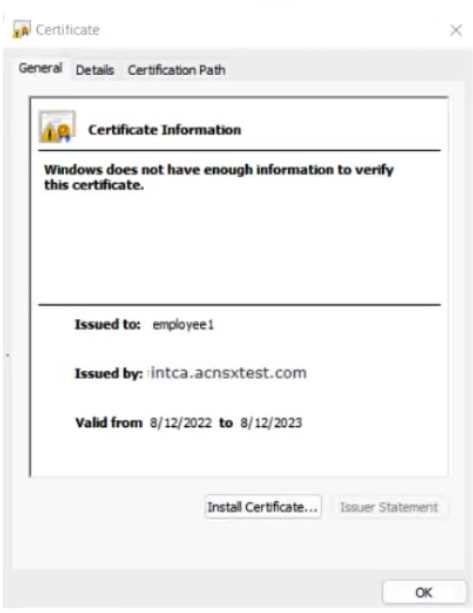 ?
? 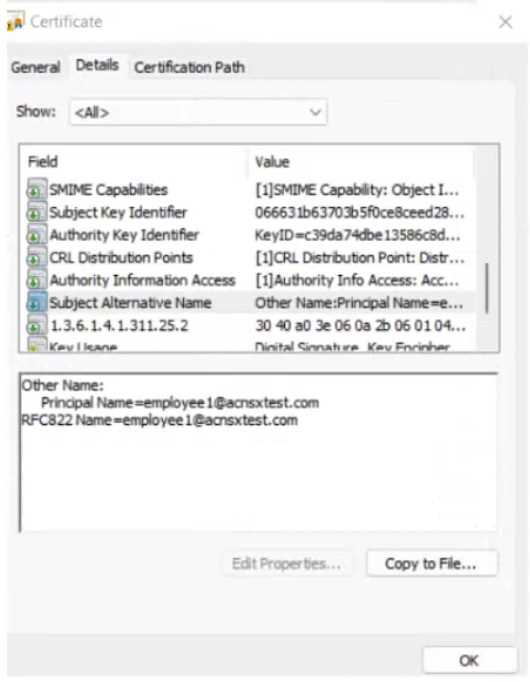 ? The company is in the process of adding Microsoft Endpoint Manager (Intune) to manage its mobile clients. The customer is maintaining the on-prem AD for now and uses Azure AD Connect to sync with Azure AD. # Requirements for issuing certificates to mobile clients The company wants to use ClearPass Onboard to deploy certificates automatically to mobile clients enrolled in Intune. During this process, Onboard should communicate with Azure AD to validate the clients. High availability should also be provided for this scenario; in other words, clients should be able to get certificates from Subscriber 2 if Subscriber 1 is down. The Intune admins intend to create certificate profiles that include a UPN SAN with the UPN of the user who enrolled the device. # Requirements for authenticating clients The customer requires all types of clients to connect and authenticate on the same corporate SSID. The company wants CPPM to use these authentication methods:
EAP-TLS to authenticate users on mobile clients registered in Intune
TEAR, with EAP-TLS as the inner method to authenticate Windows domain computers and the users
on them
To succeed, EAP-TLS (standalone or as a TEAP method) clients must meet these requirements:
Their certificate is valid and is not revoked, as validated by OCSP
The client’s username matches an account in AD
# Requirements for assigning clients to roles
After authentication, the customer wants the CPPM to assign clients to ClearPass roles based on the
following rules:
Clients with certificates issued by Onboard are assigned the “mobile-onboarded” role
Clients that have passed TEAP Method 1 are assigned the “domain-computer” role
Clients in the AD group “Medical” are assigned the “medical-staff” role
Clients in the AD group “Reception” are assigned to the “reception-staff” role
The customer requires CPPM to assign authenticated clients to AOS firewall roles as follows:
Assign medical staff on mobile-onboarded clients to the “medical-mobile” firewall role
Assign other mobile-onboarded clients to the “mobile-other” firewall role
Assign medical staff on domain computers to the “medical-domain” firewall role
All reception staff on domain computers to the “reception-domain” firewall role
All domain computers with no valid user logged in to the “computer-only” firewall role
Deny other clients access # Other requirements Communications between ClearPass servers and on-prem AD domain controllers must be encrypted. # Network topology For the network infrastructure, this customer has Aruba APs and Aruba gateways, which are managed by Central. APs use tunneled WLANs, which tunnel traffic to the gateway cluster. The customer also has AOS-CX switches that are not managed by Central at this point. 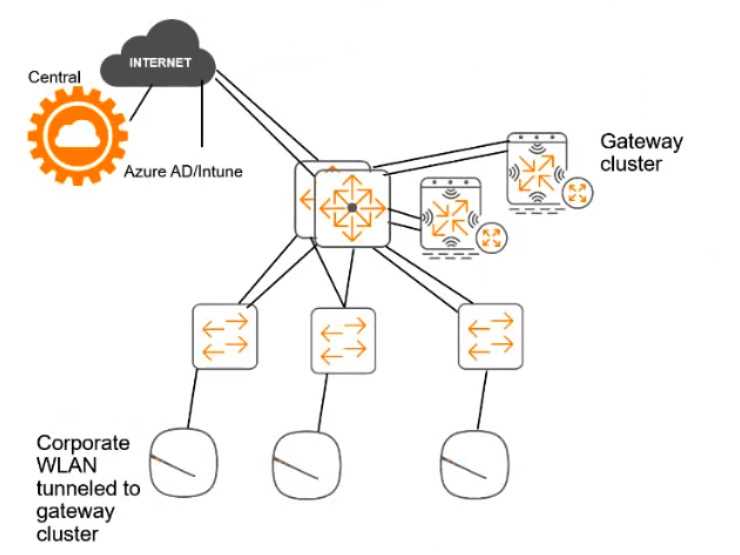 ? # ClearPass cluster IP addressing and hostnames A customer’s ClearPass cluster has these IP addresses:
Publisher = 10.47.47.5
Subscriber 1 = 10.47.47.6
Subscriber 2 = 10.47.47.7
Virtual IP with Subscriber 1 and Subscriber 2 = 10.47.47.8
The customer’s DNS server has these entries
cp.acnsxtest.com = 10.47.47.5
cps1.acnsxtest.com = 10.47.47.6
cps2.acnsxtest.com = 10.47.47.7
radius.acnsxtest.com = 10.47.47.8
onboard.acnsxtest.com = 10.47.47.8
On CPPM, you are creating the authentication method shown in the exhibit below: You will use the method for standalone EAP-TLS and for inner methods in TEAP. What should you do?
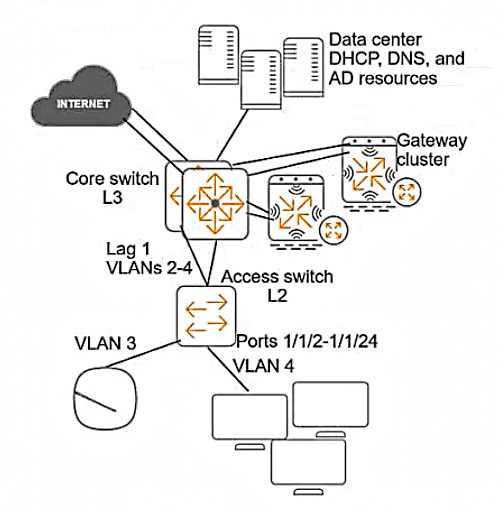 ?
A customer requires protection against ARP poisoning in VLAN 4. Below are listed all settings for
VLAN 4 and the VLAN 4 associated physical interfaces on the AOS-CX access layer switch:
?
A customer requires protection against ARP poisoning in VLAN 4. Below are listed all settings for
VLAN 4 and the VLAN 4 associated physical interfaces on the AOS-CX access layer switch:
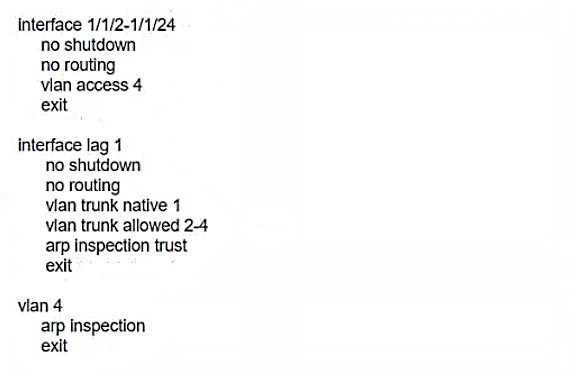 ?
What is one issue with this configuration?
?
What is one issue with this configuration?Source context
How this practice set is maintained
Maintained by the CertMage content team, this page loads questions from the exam dataset connected to its preparation resource. When an answer includes a supporting reference, it is shown with that answer so you can review the underlying vendor documentation.
Certification objectives, interfaces, and vendor services can change. Verify important details against the provider's current exam guide and documentation before your exam.