
BCS certification practice
TM12 Practice Questions
Try 10 free TM12 exam-style questions for ISTQB-BCS Certified Tester Advanced Level- Test Manager. Check each answer and review the explanation and source references.
- Exam code
- TM12
- Provider
- BCS
- Free questions
- 10
- Full set
- 65 questions
- Last update check
Achieving your testing certification demands a firm grasp of quality assurance methodologies within cross-functional teams, which is why practicing with a realistic TM12 practice quiz is incredibly beneficial for your career. Cert Mage allows you to try free TM12 exam questions that effectively simulate the difficulty and scenario-based structure of the actual assessment. As you navigate the online testing environment, you will receive detailed answer explanations that break down the logic behind every correct software testing technique and quality management strategy. If you find these sample questions helpful for your preparation, you can instantly download a free PDF demo or request full access to our comprehensive premium files to guarantee your certification success.
You are estimating the effort for the integration testing activities of a new project. Consider the following factors, which can affect that estimation:
After the presentation, you are asked to explain the chart. Assume you have applied a full risk-based testing strategy. 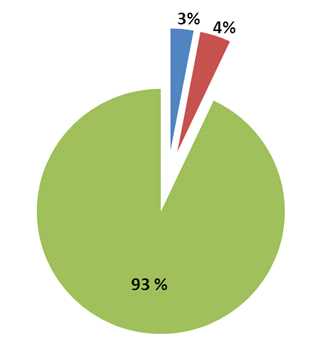 Which of the following answers would you expect to best describe the pie chart? Number of correct responses: 1
Assume that the following test cases have been executed at the end of the first week of test execution: TC-001, TC-002 and TC-007. All these tests are ‘passes’. What is the MINIMUM number of the remaining test cases that must be successfully executed to fulfill the EX1 exit criteria? 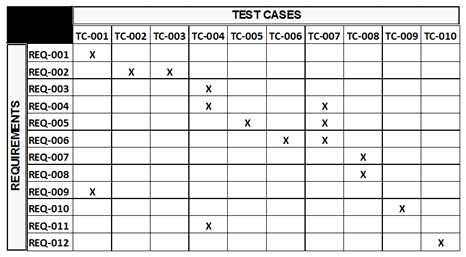 Number of correct responses: 1
You are managing the system testing for a SOA based system. The integrated system consists of several subsystems: - a SOA middleware - a CRM (Customer Relationship Management) system - a BRM (Billing and Revenue Management) system - a SMS (Subscriber Management System) system and you performed a risk analysis based on these subsystems. At the end of the scheduled period for test execution you produce a first classical report based on the traditional metrics of testing. Test pass/fail status and bug status (open/resolved) That table provides you a distorted picture of the quality risk, because there is no indication of the risk level of the failed tests, the tests not run, or the open bugs. Thus, you produce the following table to solve this distortion issue: 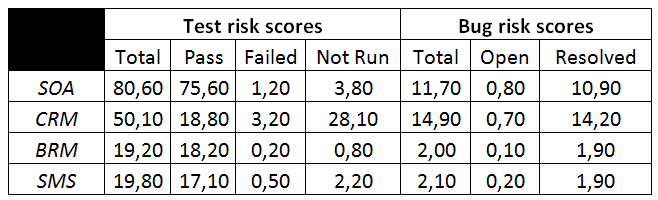 In the table above, where you have introduced the concept of risk weighting, the highest risk test or bug report has a score of 1, while the lowest risk test or bug report has a score of 0.04. Which of the following subsystems, based on the risk scores of the table, is most risky? Number of correct responses: 1
Source context
How this practice set is maintained
Maintained by the CertMage content team, this page loads questions from the exam dataset connected to its preparation resource. When an answer includes a supporting reference, it is shown with that answer so you can review the underlying vendor documentation.
Certification objectives, interfaces, and vendor services can change. Verify important details against the provider's current exam guide and documentation before your exam.