Why Medical Billing and Coding Is More Relevant Than Ever
In 2026, jobs in medical billing and coding are not just growing—they’re evolving. As healthcare providers deal with more patients, changing regulations, and stricter audits, the need for skilled medical billers and medical coders has become essential. These roles sit at the center of clinical care and administrative accuracy, making sure every step, from documentation to claims submission—happens smoothly.
Modern medical billing practices are no longer just about entering numbers or updating spreadsheets. They require a strong understanding of coding, compliance, and real-time coordination with healthcare teams. Whether it’s managing insurance claims, verifying clinical documentation, or navigating complex reimbursement procedures, the work of billing and coding professionals directly supports both patients and physicians.
What Do Medical Billers and Coders Do?
Every day, medical billers and medical coders work directly with clinical records, insurance data, and healthcare software. Their goal? To make sure claims are coded correctly, billing is processed on time, and patients are never left in the dark about their charges.
Medical coders extract details from provider notes, apply the correct CPT, ICD-10, or HCPCS codes, and ensure compliance with national and state regulations. On the other side, medical billers handle the full billing cycle, from submitting coded claims to following up with the insurance company for payment and dealing with any denials. Some may also manage payment plans, post payments, or even perform audits to check for billing accuracy.
These billing and coding jobs demand accuracy, discipline, and a deep knowledge of medical terminology and standard procedures. Without accurate coding, reimbursement delays and compliance issues become inevitable. That’s why healthcare facilities rely so heavily on their billing staff and team members to keep systems efficient and error-free.
If you’re new to the field and want a clear understanding of how the process works, we’ve broken it down in this guide on how medical billing and coding actually function. It covers the day-to-day workflow, coding systems, and how these roles contribute to the patient care cycle.
Certifications That Open Doors in 2026
To land competitive jobs in medical billing and coding, having a recognized certification is often the first step. Certifications like the Certified Professional Coder (CPC), Certified Coding Associate (CCA), and Certified Billing and Coding Specialist (CBCS) are becoming more relevant as the healthcare industry leans on credentialed talent for consistency and trust.
These certifications validate your ability to work with medical records, handle sensitive patient data, and submit insurance claims that meet payer guidelines. A coding certificate not only proves your technical skills but also boosts your chances of landing higher-paying coding jobs. If you’re curious about which certification pays the most, check out this detailed breakdown on high-paying coding credentials to help guide your decision.
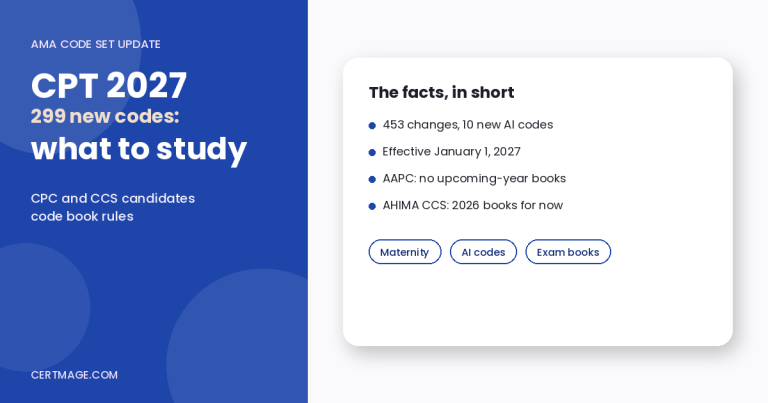
At Cert Mage, we support professionals preparing for these critical certifications by offering reliable PDF exam dumps. Our dumps reflect the actual question format and help you master exam-specific coding challenges faster. Whether you’re aiming for medical billing, coding, or both, our exam materials are built to help you move confidently toward certification and job placement.
Entry-Level Roles You Can Get Right After Certification
Once certified, several full-time job type options open up—each requiring a slightly different mix of skills and responsibilities. Entry-level medical billing and coding jobs include:
- Medical billing specialist
- Insurance claims processor
- Coding assistant
- Billing support coordinator
In these roles, you’ll likely work directly with patients, front-desk team members, and healthcare professionals to verify insurance, clarify charges, and process claims. You’ll be responsible for gathering the right clinical documentation, submitting claims with accurate coding, and following up on unpaid bills.
These jobs typically require a full time shift and involve direct communication with both clients and insurance reps. You’ll also need to manage basic reporting tasks, support the billing team, and ensure compliance with documentation guidelines. It’s a fast-paced, high-impact environment—and it’s the start of a long-term career.
Mid-Level Careers with Experience or Multiple Credentials
After gaining some medical coding experience, many professionals transition into more specialized or supervisory jobs in medical billing and coding. These roles often require not just technical skills, but also leadership, accuracy in billing practices, and a deeper understanding of how to manage complex insurance claims.
One common path is becoming a certified medical coder with a few years of practical coding under your belt. With that, you’re qualified for roles like:
- Revenue cycle analyst
- Medical billing auditor
- Senior coding specialist
- Billing supervisor
In these coding jobs, professionals take a broader role in guiding junior team members, resolving high-priority claims, and streamlining billing systems for maximum reimbursement efficiency. If you’re someone who enjoys training others or reviewing complex records, becoming a coding educator or team lead might also be a natural fit.
At this level, you’ll still need to stay sharp on medical terminology, payer rules, and regulatory changes. And while you may not be the one submitting claims daily, your role will involve oversight—ensuring accurate coding, proper charge capture, and full documentation that meets payer audit standards.
Specialized Roles in High Demand in 2026
Not every medical biller or coder follows the same path. In 2026, we’re seeing a rise in demand for specialized billing and coding roles that focus on unique medical fields or complex clinical documentation scenarios. Some of the most in-demand coding jobs right now include:
- Outpatient coding expert
- Risk adjustment coder
- Telehealth coding consultant
- EHR documentation reviewer
Each of these roles demands specific expertise—whether it’s understanding risk models, mastering outpatient procedure rules, or reviewing digital medical records for compliance. In particular, telehealth billing has grown rapidly since 2020 and now demands coders who understand evolving virtual care regulations.
As the healthcare industry expands into more tech-driven environments, these specialists help ensure compliance, improve reimbursement, and bridge gaps between patients, providers, and the insurance company.
Remote and Freelance Opportunities in the Industry
Another trend shaping jobs in medical billing and coding is the explosion of remote work and freelance opportunities. With access to secure cloud systems and HIPAA-compliant tools, coders and billers now work directly from home offices and offer services to hospitals, clinics, and private practices.
Freelance medical coders often manage billing for small or rural practices, help verify procedure codes, and support independent healthcare professionals with claim submission. Others take contract roles with larger medical facilities, reviewing medical records or even assisting in clinical research projects.
The flexibility of freelance or contract roles can be ideal for those who’ve built extensive experience over time and want more control over their schedule. These roles still require full certification, a proven strong understanding of coding guidelines, and the ability to manage workflows independently while maintaining high accuracy.
What Employers Expect from New Hires in This Field
If you’re preparing to join a billing and coding team in 2026, knowing what hiring managers are looking for is helpful. Across most job listings, employers expect:
- Proficiency with medical billing software and EHR platforms
- Familiarity with insurance claims workflows and appeal processes
- Solid grasp of medical terminology and anatomy
- Ability to ensure accurate documentation and coding
- Comfortable working with team members across departments
Even in entry-level roles, you’ll need to show attention to detail, reliability, and the ability to collaborate with other healthcare professionals. Being responsible, organized, and able to explain billing issues to patients is a valuable skill employers prioritize.
Some roles may also ask for a bachelor’s degree, especially in larger hospitals or in roles involving analytics or clinical research. But for most certified medical billing and coding professionals, your coding certificate and on-the-job readiness matter more than a degree.
Salary Ranges and Job Outlook for 2026
Salary growth for medical billing and coding jobs has remained steady over the past five years, and 2026 shows no sign of slowing. According to the national average salary reports, certified medical billers and coders can expect:
- Entry-level positions: $36,000–$45,000 annually
- Mid-level coders: $48,000–$62,000
- Senior coding specialist or audit roles: $65,000–$80,000+
Geographic location, job setting (hospital vs clinic), and your certifications play a major role in determining your pay. Coders in San Antonio, for example, report earnings higher than the national average salary due to demand and facility size.
Beyond pay, many employers offer a comprehensive benefits package, including healthcare, PTO, training reimbursement, and performance bonuses—especially for full time employees.
If you’re looking for jobs that combine long-term growth, flexibility, and the chance to contribute meaningfully to healthcare, then billing and coding stands out as one of the strongest career choices available.
Wondering what certified coders really earn? Check out our updated breakdown on medical coding salary trends to see how factors like location, credentials, and job type influence your pay in 2026.
How Cert Mage Supports Your Medical Coding Career Path
Whether you’re new to medical billing or aiming to advance your coding career, having the right prep support makes a noticeable difference. That’s where Cert Mage stands out. We specialize in helping candidates prepare for certification exams with accurate, exam-like PDF dumps that mirror real-world scenarios.
Our resources are built for those who need efficient revision and real exam insight—especially those pursuing high-demand jobs in medical billing and coding. Each set of dumps at Cert Mage is crafted by experienced professionals who understand both medical coding structure and billing nuances. These aren’t generic practice sheets—they’re tailored to help you work directly on what matters most in real exams.
When preparing for roles like medical coder, coding specialist, or medical biller, Cert Mage ensures you’re not just reading—but understanding how to apply codes, verify insurance claims, and submit error-free billing. For anyone aiming to pass faster and smarter, Cert Mage is the prep partner that puts clarity, quality, and accuracy first.
FAQs About Medical Billing and Coding Jobs
Is medical billing and coding a good job in 2026?
Absolutely. These roles are in high demand across the healthcare industry, offering job stability, remote options, and clear career progression. Billing and coding is ideal for people who are detail-oriented and want to be part of a healthcare team without providing direct patient care.
Do I need a degree to work in medical billing and coding?
Not necessarily. Most jobs in medical billing and coding only require a certification like CPC or CCA. While a bachelor’s degree can help in management or analytics roles, certifications and real coding experience matter most.
Can I work from home as a medical coder or biller?
Yes. Many employers now hire remote medical coders or billers for full time or freelance roles. You’ll need secure access to systems, good communication with team members, and consistent accuracy in your work.
How long does it take to become a certified medical biller or coder?
Most certification programs take 4 to 6 months. After completing your training, you can apply for job type roles like entry-level billing or coding support. Many then grow into advanced positions over the next few years.
The 2026 Outlook: Stable, Specialized, and Skill-Driven
As the demand for detailed, compliant, and efficient administrative support increases in clinics, hospitals, and private practices, the role of the medical biller and coder will only gain more importance. From managing patients’ charges to reducing billing errors, these professionals are now core team players—not back-office staff.
The 2026 job market favors those with a strong understanding of billing, accurate coding, and the ability to interact effectively with clients, insurance companies, and healthcare professionals. Whether you’re interested in outpatient clinics, large hospitals, or telehealth platforms, the field has roles that fit nearly every job type preference—from full time shift schedules to remote contracts.
If you’re the ideal candidate—detail-oriented, organized, and ready to join a fast-moving team—then now is the right time to consider a career in medical billing and coding. And with Cert Mage by your side, you’re not going in blind—you’re stepping in prepared.